Richard Casino No Deposit Codes – A Practical Guide for Aussie Players
How the No Deposit Codes Operate
In simple terms, a no‑deposit code is a short string of letters or numbers that unlocks a free credit amount when you create a new account at Richard Casino. You don’t have to put any of your own cash in first – the casino gifts you a small bankroll to test the games and see if the platform feels right.
Most Australian users receive the code via email newsletters, affiliate sites, or directly on the casino’s promotion page. Once entered during the sign‑up flow, the bonus appears in your account instantly, ready for you to wager on slots, table games or even the live dealer section.
What Makes a No‑Deposit Code Valuable?
Zero initial outlay – you keep your own money safe.
Immediate play – the bonus is credited as soon as registration is complete.
Potential real‑money win – after meeting wagering, you can withdraw winnings.
Step‑by‑Step: Claiming the Bonus and Registering
First, head to the Richard Casino sign‑up page and fill in the basics: name, email, date of birth, and a secure password. Australian players must also confirm they are over 18 and that gambling is legal in their state.
When the form asks for a promotion code, paste the richard casino no deposit codes you’ve collected. After hitting “Submit”, you’ll receive a verification email – click the link inside to activate your account. The free credit should pop up within a few minutes, ready for you to spin.
Wagering Requirements & Game Restrictions
Even though the bonus is free, the casino expects you to gamble a certain amount before you can cash out. Typical wagering sits at 30x the bonus value, meaning a $10 free credit needs $300 in bets before withdrawal.
Not all games count equally. Slots usually contribute 100 % to the requirement, while table games like blackjack or roulette may only count 10 % or 20 %. Check the fine print on the promotion page to avoid surprise re‑rolls.
Slots – 100 % contribution
Live casino – 20 % contribution
Sports betting – 0 % (usually excluded)
Payment Methods, Deposits and Withdrawals
After you’ve cleared the wagering, you’ll want to pull the winnings out. Richard Casino supports a range of Australian‑friendly payment options, each with its own speed and fee profile.
Below is a quick comparison to help you pick the method that matches your needs.
Method
Deposit Speed
Withdrawal Speed
Typical Fees
Visa/Mastercard
Instant
2–3 business days
None to $2
PayPal
Instant
Same day
~$1.50
Bank Transfer (POLi)
Instant
1–2 business days
No fee
PayNearMe (cash voucher)
Within minutes
Up to 48 hours
Free
Remember to complete the KYC verification – a copy of your ID and proof of address – before the first withdrawal. This step is mandatory for all Australian licensed casinos and keeps your funds secure.
Mobile Experience and Live Casino Options
Most Aussie players prefer betting on the go, and Richard Casino offers a responsive web app that works on iOS and Android without needing a separate download. The mobile UI mirrors the desktop layout, giving you access to slots, live dealer tables and even the sportsbook if you enjoy betting on AFL or cricket.
The live casino section streams real dealers in real time, with games like roulette, baccarat and blackjack streamed in high definition. Latency is low enough that you can place bets almost as quickly as in a brick‑and‑mortar venue.
Instant push notifications for bonus expiry.
Touch‑optimised controls for faster spin.
Secure SSL encryption across mobile browsers.
Security, Licensing and Responsible Gambling
Richard Casino is licensed by the Malta Gaming Authority and holds an additional Australian Kahnawake offshore permit, meaning it must obey strict player protection rules. Your personal data is stored behind 128‑bit SSL encryption, and regular third‑party audits verify game fairness.
If you ever feel the need to step back, the site provides self‑exclusion tools, deposit limits and links to Australian responsible‑gambling charities like Gambling Help Online. The support team is reachable 24/7 via live chat and email, and they usually reply within minutes.
Frequently Asked Questions
Can I use the no‑deposit code if I live in Tasmania? Yes – Richard Casino accepts players from all Australian states, provided you are over 18 and have a valid Australian bank account.
What happens if I don’t meet the wagering requirement? The bonus and any winnings derived from it will be forfeited. You can always start a fresh deposit bonus after meeting the terms.
Is there a limit on how much I can win from the free credit? Usually there is a maximum cashout cap, often $100‑$200 for no‑deposit offers. Check the promotion details for the exact figure.
Do I need to download a separate app? No, the casino’s web app works perfectly on modern smartphones and tablets, so you can play straight from your browser.
Richard Casino Australia – Practical Guide for Aussie Players
Getting Started: Registration & Verification
First‑time Aussie players will find the sign‑up flow at Richard Casino surprisingly straightforward. You begin by clicking the richard casino login button on the homepage, then fill in your name, email and a secure password. The form asks for your date of birth – essential to confirm you’re over 18 – and your residential address, which will be used for later verification.
After you submit the details, an email arrives with a verification link. Clicking it activates your account and unlocks the welcome bonus. Expect a short KYC step where you upload a photo ID and a utility bill; this is standard for licensed Australian operators and helps keep the platform safe from fraud.
Welcome Bonus & Wagering Requirements
Richard Casino rolls out a two‑tier welcome package for new users. The first tier matches 100% of your initial deposit up to AUD 200, while the second adds 50 free spins on a popular slot. Both parts come with a 30x wagering requirement on the bonus amount, which means you’ll need to bet thirty times the bonus before you can withdraw any winnings.
Keep an eye on the game contribution percentages – slots usually count 100%, but table games may only contribute 10‑20% toward the wagering. If you prefer low‑variance games, look for those with a higher contribution to speed up the clearance.
Game Selection: Slots, Live Casino, and Sports Betting
The catalogue at Richard Casino Australia is powered by several leading software providers, delivering a mix of classic pokies, video slots and progressive jackpots. Popular titles include “Mega Moolah” and “Starburst”, both offering RTPs above 96%.
Live casino lovers can join real‑time tables with professional dealers – blackjack, roulette and baccarat are streamed in HD. Sports betting is also integrated, covering Australian rules football, cricket and international leagues. The sportsbook uses a separate interface but shares the same wallet, so you can switch from a spin to a bet without leaving the site.
Payment Methods: Deposits & Withdrawals
Australian players have a decent spread of deposit options: credit/debit cards (Visa, Mastercard), POLi, and major e‑wallets like PayPal and Skrill. Deposits are processed instantly, letting you jump straight into the action.
Withdrawals are a bit slower. E‑wallet payouts usually arrive within 24‑48 hours, while bank transfers can take up to five business days. The minimum withdrawal is AUD 20, and each request is subject to a standard identity check to comply with Australian gambling regulations.
Mobile Experience and App
Richard Casino’s mobile site is fully responsive, meaning you can play on any Android or iOS device without downloading anything. The layout adjusts to fit smaller screens, and the navigation menu stays at your fingertips.
For those who prefer a dedicated app, a lightweight Android version is available through the website’s download page. The app mirrors the desktop experience, offering push notifications for bonus drops and live‑match alerts. iPhone users can simply add the site to their home screen for a near‑app feel.
Security, Licensing and Responsible Gambling
The platform operates under a licence from the Malta Gaming Authority, which is recognised by Australian regulators. All data transmissions are encrypted with 128‑bit SSL, protecting personal and financial information from prying eyes.
Responsible gambling tools are built in: you can set deposit limits, session timers, and self‑exclusion periods. If you ever feel you need a break, the “Take a Break” button routes you to a support page with contact details for Australian problem‑gambling charities.
Customer Support and Common Issues
Support is offered via live chat, email and a 24‑hour phone line. The live‑chat widget pops up on every page and typically answers within a minute. Common queries include bonus eligibility, pending withdrawals, and troubleshooting login problems.
If you run into a verification hiccup, the support team will ask for a clearer copy of your ID or a recent utility bill. For payment‑related concerns, they can guide you through alternative deposit methods or explain why a withdrawal might be delayed (often due to pending KYC checks).
Quick Comparison Table
Feature
Details
Australian Player Benefit
License
Malta Gaming Authority
Respected regulator, recognised in Australia
Welcome Bonus
100% up to AUD 200 + 50 free spins
Good boost for first deposit
Wagering Req.
30x bonus amount
Clear and comparable to other Aussie sites
Deposit Methods
Visa, Mastercard, POLi, PayPal, Skrill
Instant processing, familiar to locals
Withdrawal Speed
E‑wallet 1‑2 days, Bank 3‑5 days
Reasonable for Australian banks
Mobile Access
Responsive site + Android app
Play on the go without extra cost
Final Tips for Australian Players
Before you dive in, set a realistic budget and decide which games you’ll focus on – high‑RTP slots tend to give steadier returns, while live casino tables can be more volatile. Use the built‑in limit tools to keep your play within safe bounds.
Stay up to date with promotional calendars; Richard Casino often runs limited‑time reload bonuses that can boost your bankroll mid‑season. And remember, the best experience comes from a balanced mix of fun and caution – enjoy the games, but always gamble responsibly.
Check the bonus terms before claiming.
Verify your account early to avoid withdrawal delays.
Use reputable payment methods you already trust.
Take advantage of the mobile site for on‑the‑move play.
Jack is a three year old Border Collie/Aussie mix. He looks like a Border Collie more than anything else. One day he was sitting in front of me and just fell over. He started shaking and jerking. He looked like every muscle was contracted. If he was breathing it was very shallow. My mother, who was sitting near by said “he’s having a seizure!”.
You would think that the concept behind User Experience (UX), or user centered design would be a common sense sort of thing in design, but until recently it was not. In the past, when a designer received a project from a client most designers first and foremost, wanted to please that client – primarily the one marketing manager, business owner, person in charge, etc. who hired them for the project in the first place. I guess you would call that “client-centered” design or even designer-centered design since we must first please ourselves before the client even sees a concept. What I learned from my courses with the Interaction Design Foundation (IDF) was something quite different. Eye opening in fact. More about UX design and IDF later.
When I was a small boy, my grandmother told me she was sound asleep one night when she suddenly sat up in bed and said to herself “my brother just had a heart attack.” At first, she dismissed it as just a bad dream, but couldn’t shake the feeling that there was more to it than a nightmare. Her brother lived hundreds of miles away and was healthy as far as she knew. Later she found out he did have a heart attack at just about the time she awakened that night. Strange, but true. I’ve always been skeptical of clairvoyance, crystal balls and the like, but truth is, maybe we are all connected somehow. Maybe our empathy for each other allows us to see beyond ourselves in ways we don’t yet understand. Could we as designers use this connection, this innate empathy to improve the lives of others …and our designs?
A little background about me: my name is Rick Hogan, owner/graphic designer at Hogan Design. I have a BFA Design Communication degree from Texas Tech and I have operated one of the most successful solo design firms in the Dallas area for over 30 years and I am now 62 years old. Throughout my career, my business focus had been mainly print collateral and packaging. Now due to the changing times and out of necessity, I am focusing on digital design and adding UX/UI web design and development to my print design capabilities with the help of online classes like those from IDF, Free Code Camp and Codecademy.
Texas Tech University
Right out of high school I got into Texas Tech University in the pre-med program. I thought I wanted to be a doctor. I had a real talent for art, but it was just a hobby to me then. Medicine and making a good living were my interests and my focus. Back in the late 1970’s graphic design was pretty much unheard of. It was sort of mixed in with advertising and no one really seemed to know the difference. I sure didn’t. Little did I know I was soon to find out. After several semesters of mediocre grades in chemistry and biology, I started to rethink my decision to be in the pre-med program at Texas Tech. No one bothered to tell me that pre-med is not required to get into med school so my ignorance led me to fall back on my art skills and change my major to art and design. I really wanted to be a fine artist or an illustrator at that point, but I thought it was unlikely that I could make a living. Advertising seemed like a viable option. At Texas Tech, design was in the art department, advertising was in the business department. That’s all I needed to know – design was for me.
At the time, ArtCenter in Pasadena, California was one of the most famous Design schools in the country. One of the best instructors from ArtCenter decided to come to Texas Tech. Before ArtCenter he owned one of the hottest design firms in LA. Well, this guy came to Tech and created a top-notch design department which I was lucky enough to be accepted into. I couldn’t have asked for a better design education. It was a tough program. Many started, only a few made it through. I was one of the few and graduated with a BFA degree in Design Communication in 1982.
We were taught how to recognize and create “good design” in other words, conceptual visual communication that is aesthetically pleasing to the eye. The focus was totally on print. At the time there was no such thing as a computer as we know them today. There were these giant machines that could do calculations of some sort using huge stacks of punch cards. No hint of the interactive future that was coming or the need for design that was considerate of the user. The closest thing we had to UX was to never design something that was hard to read or hard to handle. We were taught to use bigger type if the reader was probably going to be older. That’s it. Oh, I almost forgot, never design a business card that won’t fit into someone’s wallet or standard business card caddy.
Image created for Mortal Kombat 4 computer game packaging
After graduating from Texas Tech, I came to Dallas by way of Denver and was hired by a small design firm. Right away I figured out that my job was to create designs that pleased my boss. As far as he was concerned, the end user was his client. The actual end user was far from our minds. I was there for about five years and learned the art of “paste up,” I saw an opportunity to start my own design business. With no business experience at all it was a big leap of faith, but it worked out great and I was able to quadruple my income in the first year and never looked back. Design was my business and business was good. That was right about the time computers were first appearing in the design world. Apple Macintosh, Photoshop, Adobe were names unknown, but as you know, soon to be bigger than big. It didn’t take a crystal ball to see that this was the wave of the future. I jumped right on that wave and rode it for all it was worth. My T-square and X-Acto knife were retired and I invested in a Mac and design software. I realized that I loved computers and was enthusiastic about learning how to use them for my business. Self-taught all the way.
Thirty years ago no one would have imagined something called the internet and devices called lap tops and smart phones would change the very nature of the commercial art/graphic design business. Print was king. Every business needed brochures, business cards and letterheads. Fast forward to around the year 2000 when the internet began to squeeze out print as a major way businesses communicate with their customers. Brochures and letterheads started to be replaced with emails and web sites. Fast forward another ten years and smart phone apps became the big thing. Many print shops and print designers were going out of business. Many small design shops closed and their owners became corporate employees. Luckily for me I had a loyal client who has sent me a ton of work for many years. With his patronage I was able to keep my one-man shop open and continue doing print design right up to the present. Still it was clear that the glory days of print were over and my business was suffering. I knew I needed to do something so, after long deliberation, I decided I better update my skillset. UX caught my attention after seeing all the jobs available and the higher pay offered. A recruiter suggested I learn HTML, CSS and Javascript as well. In my pursuit of these I came across WordPress – an open source program used to create websites. Now you’re talking. I had created several websites using Dreamweaver and Weebley so I was not a total newb. These all seemed like viable directions for my business into the future, especially UX and WordPress. Now I asked myself, what’s the best way to study UX/UI?
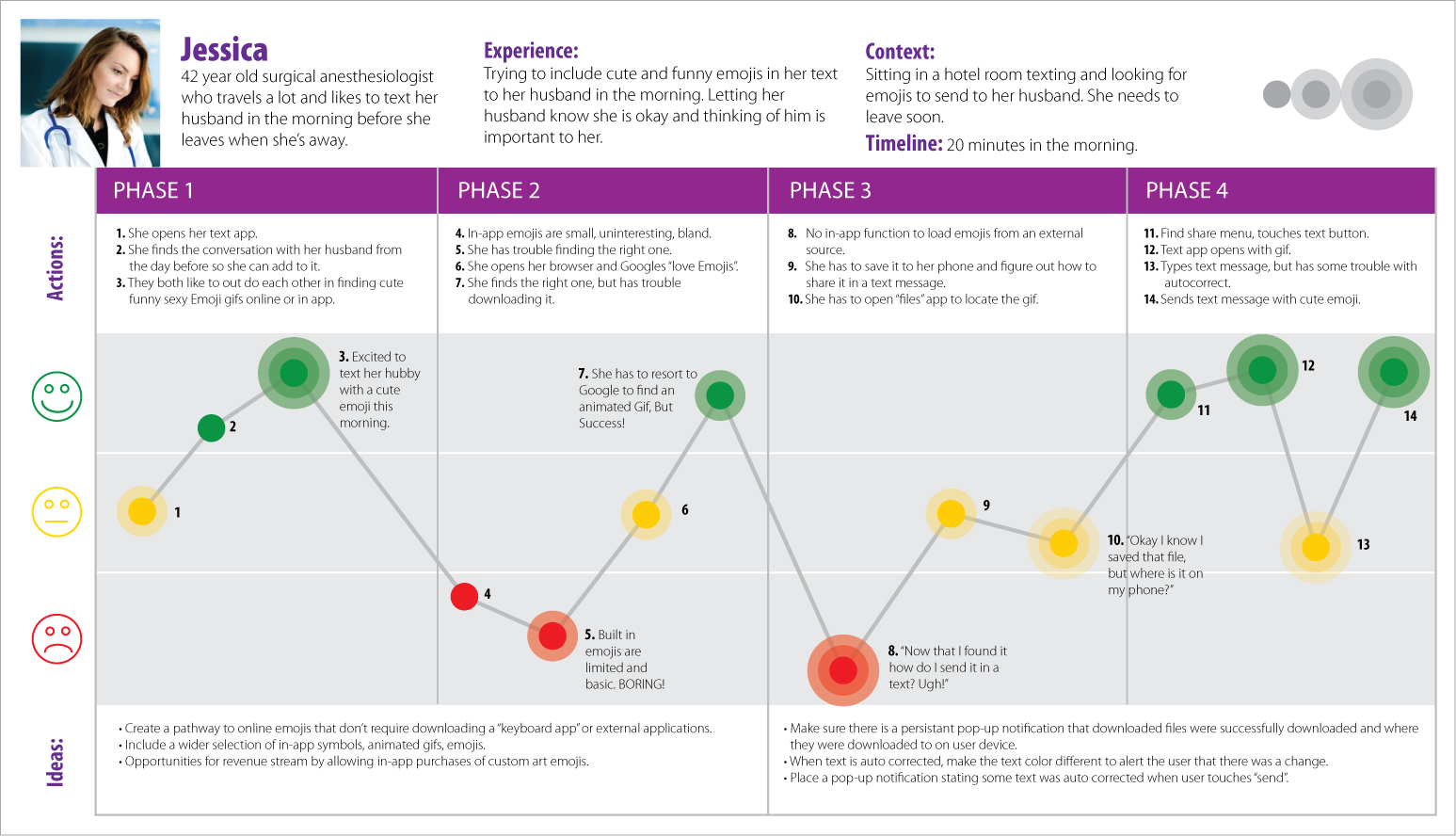
Journey Map
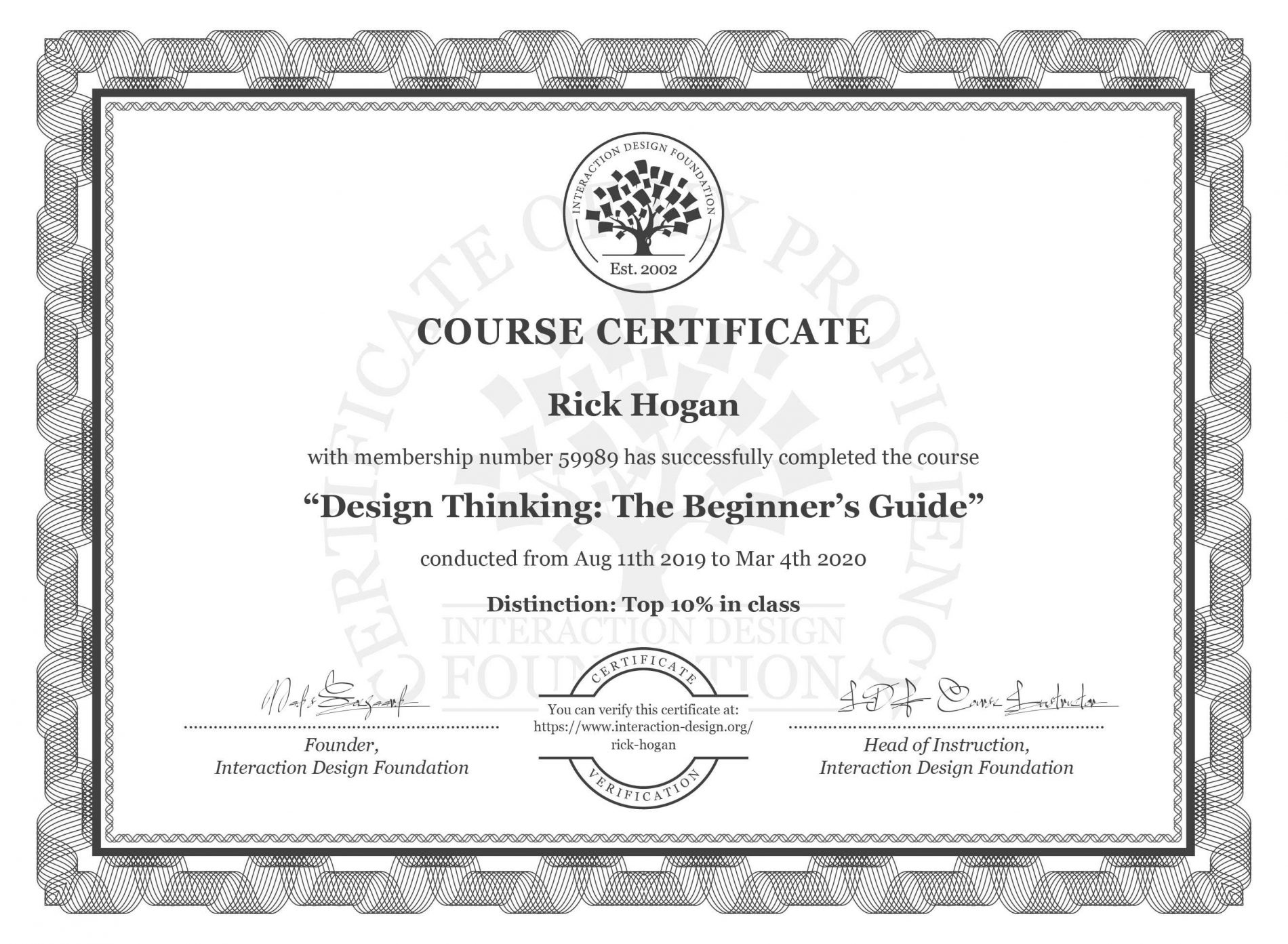
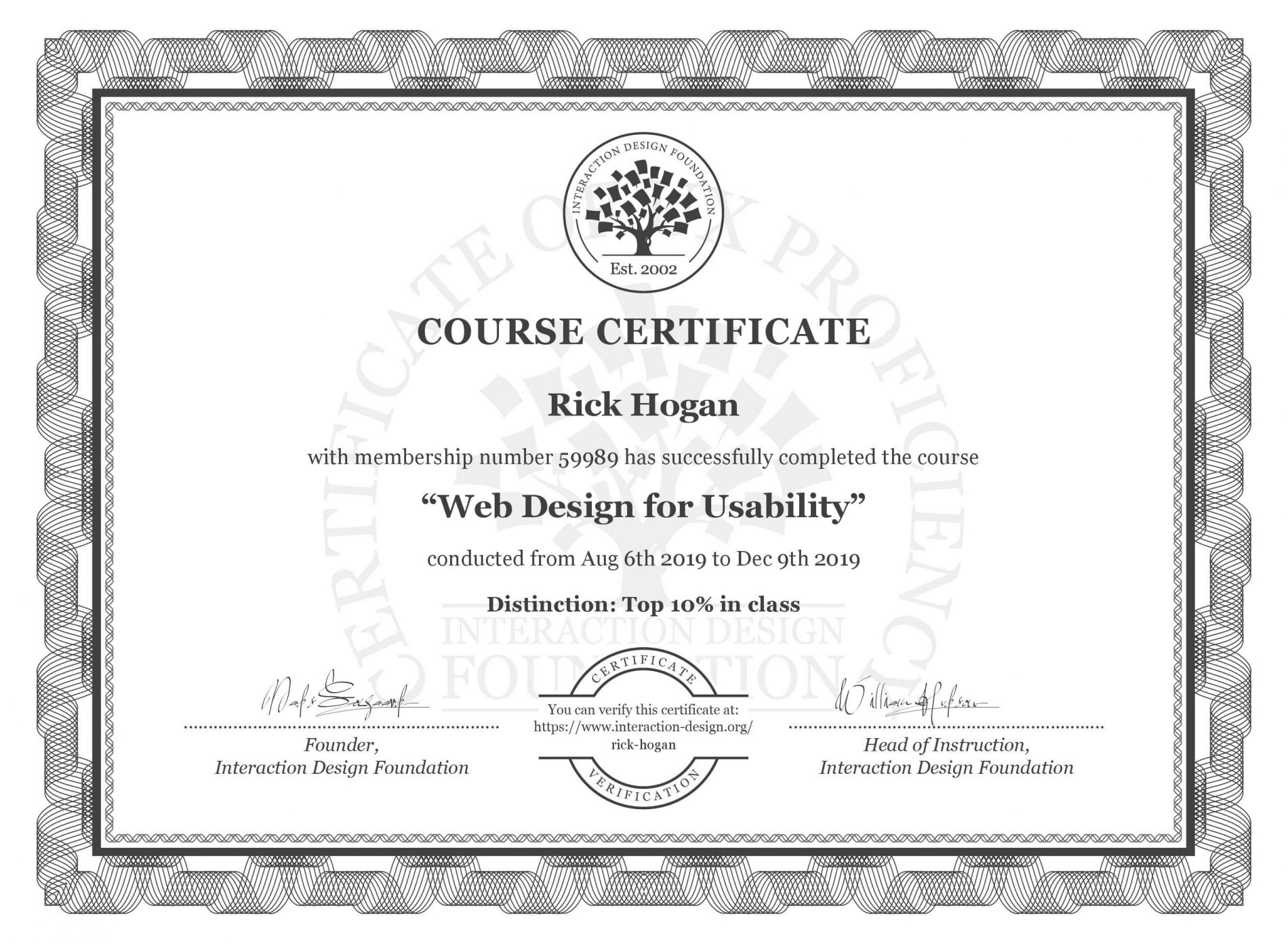
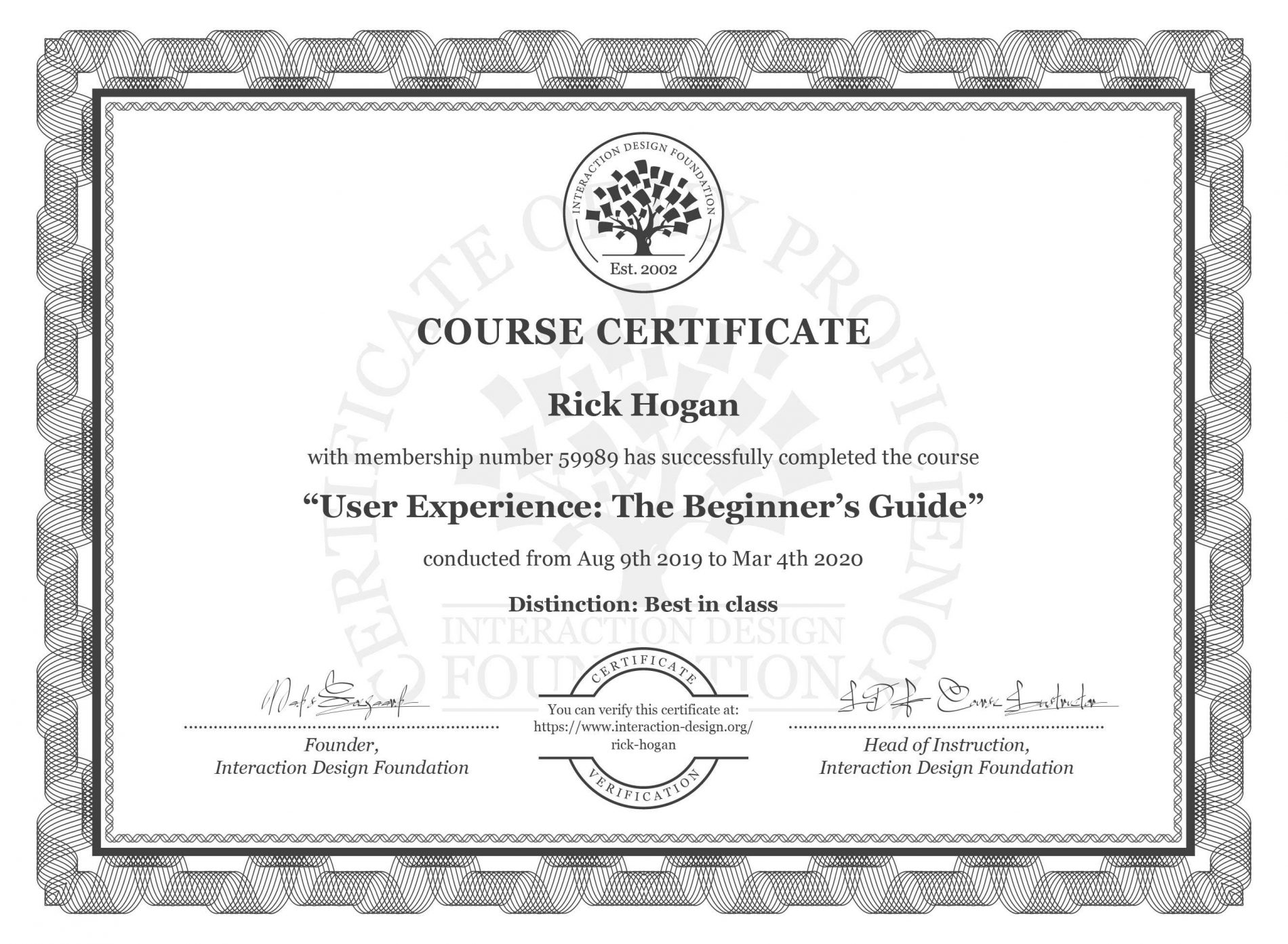
After spending many hours and several days researching online UX schools it was clear to me that The Interaction Design Foundation was the best choice for learning and getting certified in UX/UI design. I was encouraged by several people that I met on LinkedIn who were employed as UX professionals. They recommended IDF and had obtained certificates from there themselves. If you compare the IDF program and cost, there is no other school that comes close. IDF functions as a non-profit and the tuition is extremely affordable for just about anyone. So, with a certain amount of skepticism I signed up with IDF and paid for a year of online training. My skepticism arose more from ignorance on my part regarding online training in general. I’m happy to say I’m a believer now.
The IDF program has ten areas of study called learning paths, each area has eight to ten courses, each with a certificate you can earn. To complete an area of study, UX Designer for instance, you would need to pass ten courses and receive ten certificates: two foundation courses, two beginner, two intermediate and 4 advanced courses. Each course has 5 to 10 lessons, each lesson usually has a video and or several paragraphs of information and a short quiz at the end. They even list how long it should take to complete each lesson and course. None are timed so you can learn at your own pace. They do restrict access a bit so each course is spread out over several weeks. You can take multiple courses at the same time. There are plenty of links for help and networking as you learn as well.
Interaction Design Foundation Certification for Rick Hogan Hogan Design
Interaction Design Foundation Certification for Rick Hogan Hogan Design
Interaction Design Foundation Certification for Rick Hogan Hogan Design
Interaction Design Foundation Certification for Rick Hogan Hogan Design
The courses I took on IDF were really very informative and actually fun to take. The wording of the lessons was easy to understand, for the most part, and the quizzes were set up so you could go back and review the lesson as you answer the questions. Most questions were multiple choice or short essay. I have completed 4 courses so far in the UX Designer learning path for an average of 98.75% score. That put me in the top 1% of those taking the courses worldwide. I figure if I can do it, so can just about anyone. Learning about design thinking, empathy for users, accessibility and other aspects of UX design will add a whole new dimension to my design practice. Developing personas, wire-frames, affinity diagrams, iteration and prototyping were all things I learned from IDF courses. These were terms I had never even heard of before, but now can bring into practice with confidence. I’m still in the early stages of my learning, but I feel like I’m well on my way to being a full-fledged UX designer. I would highly recommend IDF to anyone interested in furthering their career into the UX field. Graphic designers especially can benefit from learning user centered design thinking from IDF.
Can user centered design thinking improve our designs and allow us to reach far beyond our own grasp? Can our connection to others actually help our businesses? Can an old dog learn new tricks – can an old designer learn UX? I believe so. I KNOW so. When you think about how our designs affect our users then everyone involved can benefit. Projects will improve, profits will grow, clients and their customers will be happier.





Recent Comments